
ROS2 Robot Stacking (Palletizing)
Overview
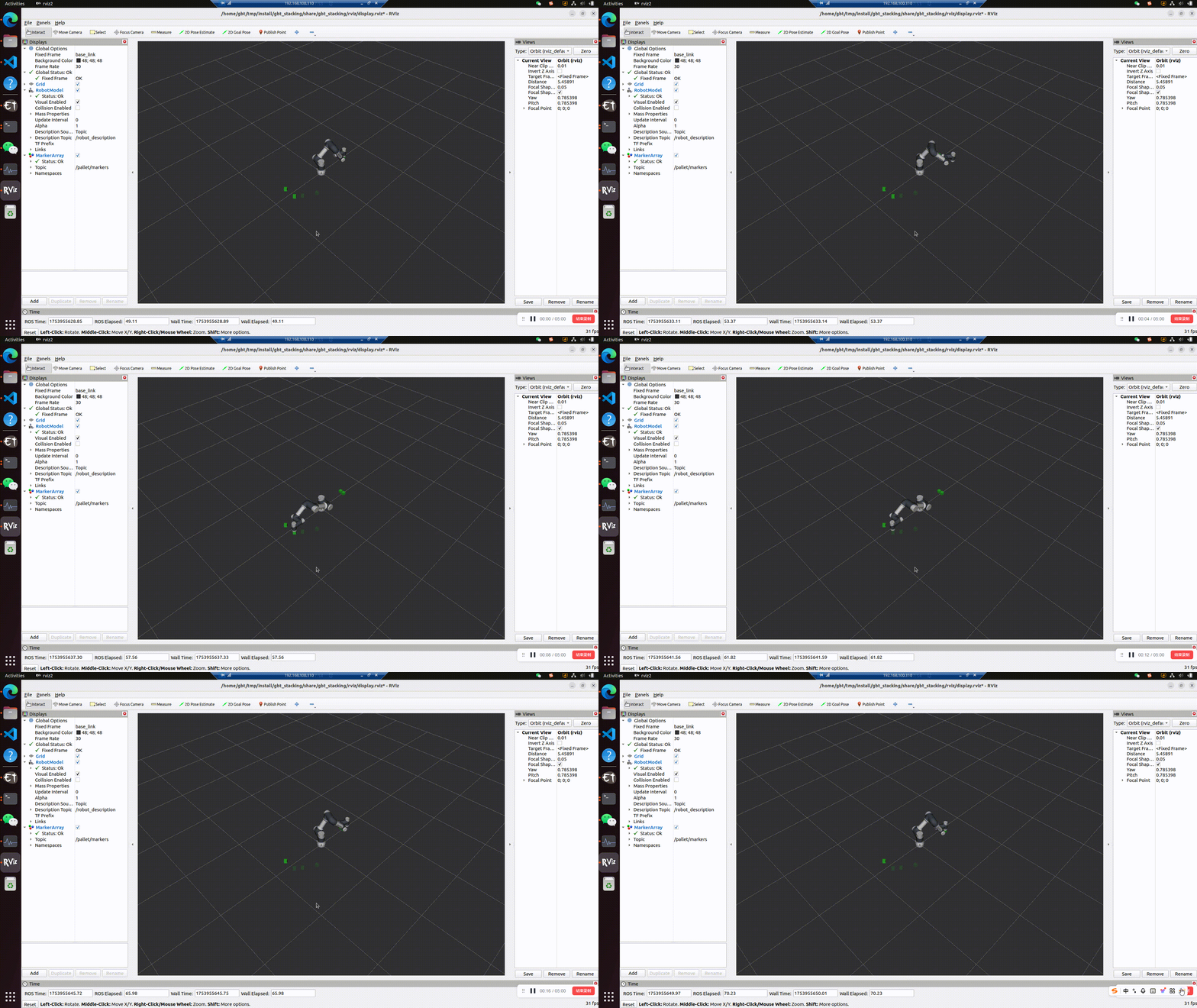
This project demonstrates controlling Shanghai Agilebot collaborative robots for palletizing tasks using ROS2 software packages. It integrates vision processing, stacking algorithms, and robotic arm control functions, supporting both physical robots and virtual simulation environments. Readers should have basic knowledge of ROS2 and robot programming.
System Requirements
- Operating System: Ubuntu 22.04
- Core Framework: ROS2 Humble
- Robot Drivers:
- Shanghai Agilebot ROS-driver package (version >= v0.0.1)
- Python SDK (version >= v1.6.3.2)
- Vision System:
- AgileGaze (Agilebot proprietary vision software) or compatible simulation node
- Robot Requirements:
- Shanghai Agilebot collaborative robot (physical or virtual simulation)
- Software: Copper ≥ v7.6.0.1
Virtual Environment Note: Simulation environment support available. Contact Agilebot for virtual controller license.
System Architecture
Node Topology Diagram
Legend:
Node Types (Green Rectangles):
robot_Stacking: Main control node (system coordinator)gbt_agilegaze: Vision recognition node (image processing)stacking_visualizer: Visualization node (result display)service_server: Service interface (control commands)robot_bridge: Communication bridge (hardware interface)RViz: ROS visualization tool (3D display)
Non-Node Entities:
- 🔶 Entity (Orange):
Robot Controller: Physical robot controller
- 🔷 Service (Blue):
GetAgileGaze: Vision recognition servicePalletVisualizer: Visualization servicesend_script: Script transmission service
- 🔶 Entity (Orange):
Core Module Functions
| Module Name | Function Description |
|---|---|
| gbt_agilegaze | Interfaces with AgileGaze system, provides object center coordinates (x,y) and rotation angle (c) |
| robot_stacking | Main stacking controller, coordinates vision, algorithms, and execution |
| stacking_visualizer | Visualizes grasp/placement points in real-time |
| service_server | ROS-driver gateway, forwards control commands |
| robot_bridge | Synchronizes robot state to RViz |
| Robot Controller | Physical robot controller |
Workflow
Legend
| Element Type | Color/Marker | Example |
|---|---|---|
| ROS Nodes | 💚 Green background | robot_Stacking, gbt_agilegaze |
| Physical Entities | 🧡 Orange background | Robot Controller |
| Service Calls | 🔷 Blue diamond | GetAgileGaze.srv() |
| External Interfaces | 💜 Purple background | Operator |
| Data Feedback | Solid lines | xycList, execution results |
Workflow Steps
Start Trigger
Operator sends start command with parameters to main nodeVision Recognition
Main node calls AgileGaze viaGetAgileGaze.srv()to get xyc object dataPath Planning
Calculates grasp/placement points and motion trajectoriesVisualization Update
Syncs points viaPalletVisualizer.srv()for RViz renderingRobot Execution
Sends commands throughsend_script.srv()to robot controllerStatus Synchronization
Real-time robot state sync to RViz, returns task results to operator
Configuration Files
| File | Path | Contents |
|---|---|---|
| Robot Config | ../gbt_driver/config/robot_config.yaml | Robot IP address, connection parameters |
| Stacking Params | config/stacking_params.yaml | Algorithm parameters, workspace settings |
| Visualization Params | config/pallet_viz_params.yaml | Visualization display parameters |
Modify according to actual application. See file comments for details.
System Interfaces
Vision Interface Service
- Service Type:
gbt_stacking_interface/srv/GetAgileGaze - Description: Gets object coordinates from vision system
# Request
---
# Response
gbt_stacking_interface/AgileGaze AgileGaze
See
gbt_stacking_interface/AgileGaze.msgfor AgileGaze interface details.
RVIZ Visualization Service
- Service Type:
gbt_stacking_interface/srv/PalletVisualizer - Description: Updates visualization coordinates
# Request
geometry_msgs/Point[] grasp_points
geometry_msgs/Point[] place_points

# Response
bool success
string message
Quick Start Guide (Simulation Mode)
Prerequisites
- Install ROS2 Humble and dependencies
- Install Agilebot ROS driver (Installation Guide)
- Configure robot IP in
gbt_driver/config/robot_config.yaml - Configure gripper/IO mapping in Agilelink (default DO port 1)
- Servo on
Launch Command
# Build project
colcon build
source install/setup.bash

# Start simulation
ros2 launch gbt_stacking gbt_stacking.launch.py \
  fake:=True \
  robot_type:=<C5A/C7A/C12A/C16A>

# terminal 2 (manul trigger)
source install/setup.bash
ros2 service call /gbt_stacking/external_trigger  gbt_stacking_interface/srv/ExternalStackingTrigger "{trigger: True}"
Vision System Integration
Using AgileGaze
- Camera Calibration:
- Calculate coordinate transformation using AgileGaze calibration board
- Workspace Setup:
- Define grasp workspace origin in base coordinates
- Update
uf_grasp_pointsin stacking_params.yaml
- Placement Area Setup:
- Define placement origin in base coordinates
- Update
uf_place_pointsin config
- Initial Pose:
- Configure safe joint angles
init_joints
- Configure safe joint angles
Custom Vision Integration
# Custom vision node template
import rclpy
from gbt_stacking_interface.srv import GetAgileGaze

class CustomVisionNode(Node):
    def __init__(self):
        super().__init__('custom_vision')
        self.srv = self.create_service(
            GetAgileGaze,
            '/gbt_vision/service/AgileGaze',
            self.vision_callback)

    def vision_callback(self, request, response):
        # Implement vision logic
        response.agile_gaze = ...
        return response
Important Notes
- Safety:
- Test first in simulation mode
- Confirm emergency stop availability
- Ensure clear workspace
- Configuration:
- Verify all YAML configuration files before startup